
This Will Also Change
Easing the Emotional Whiplash of Leaving Loved Ones Behind

When studying Vipassana meditation, there’s an understanding that nothing escapes impermanence.
I’ve been reflecting on this a lot, as last week I left my sister’s home after spending a few months on Whidbey Island with my family. Living in different places throughout the year means there’s always someone I love that I say goodbye to.
For me, leaving my niece and nephews is the hardest. Although I’ve lived this lifestyle for most (if not all) of their lives, each departure brings sadness. It’s not only my own sense of loss, but also the weight of theirs.
I didn’t fully connect the dots on this until last week, while talking with my friend Marianna, a Mexican who married a German and now lives in Portugal. We spoke about how leaving loved ones isn’t just hard for us, it’s hard for those we leave behind.
When my niece Noelle was four, she used to hide the armoire keys so I couldn’t pack my clothes. “No more planes, no more trains, no more trips to California,” she’d cry for hours as I gently played along, asking, “If I were a key, where would I hide?” Even now, remembering her tears makes my heart hurt.
The video below is from six years ago, of us practicing yoga together. It reminds me that within the change, the connection and impact we share is forever.
Last week, my nephew Shane, only three, curled up on the bathroom floor after bath time, crying, “Why are you leaving me? Mom, I miss her already.”
That sadness for him hurts, the kind that brings emotional whiplash every time. I’ve noticed how the first week after leaving often feels like a mix of numbness, pain, and self-questioning. It shows up differently each time. I try to meet myself with kindness, while designing practices to shift the behaviors that don’t align with my deeper “why” for this lifestyle. Making sure that I am cognizant of the intentions for self when away from family.
I’ve been a morning meditator for years, but re-reading the teachings of S. N. Goenka through this particular transition has offered a fresh perspective.
When we examine emotional pain objectively, similarly to how a doctor observes a patient, we begin to notice that the pain itself is constantly changing. Every moment passes, and then begins again. Within that awareness, we see that every aspect of life (our thoughts, our breath, our bodies) is always changing.
Nothing stays the same.
So when we leave behind comforts and loved ones, whether for a short business trip or a long season, there’s a reminder… this, too, will change.
My neighbor-friend in Costa da Caparica, a traveling pet sitter, shared that her job has taken her all over the world and that in her travels, loneliness is a huge piece of it. It reminded me that goodbyes always carry loss, no matter how fulfilling the experiences ahead may be.
Today, my niece is eleven. As I settle into this chapter away, I use one of her felt art pieces as a bookmark for my morning readings. I sent her a photo of it and told her we’re “starting our days together.”
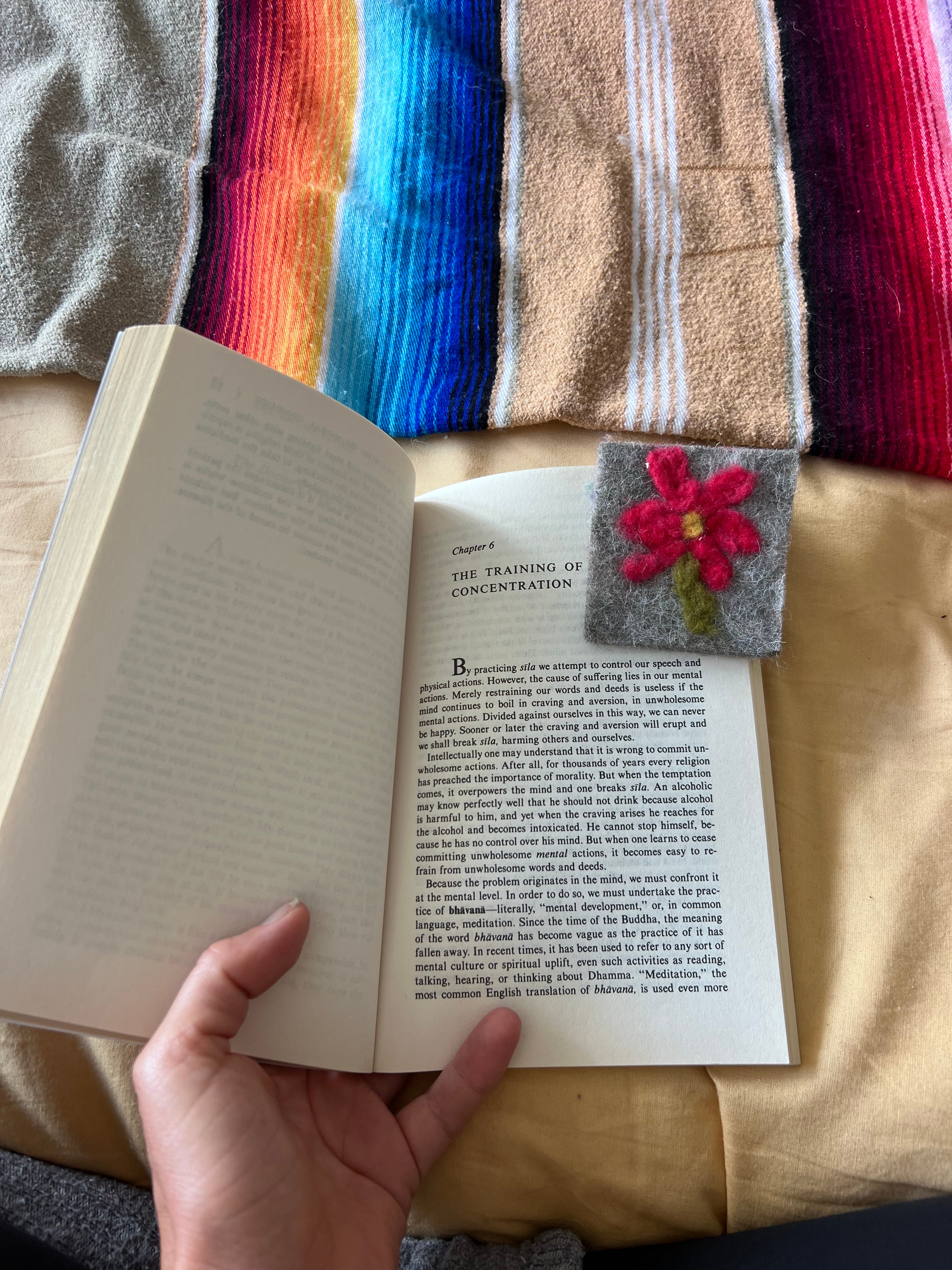
Noelle doesn’t hide the keys anymore. She’s growing, expanding, maybe even imagining herself in a new way. She’s always the first one to text me after I leave, “how is Portugal??” :) And that’s what I hold onto, the trust that love stretches across oceans, and that every goodbye carries the seed of shared time together, as our fullest versions of self.
Even with Shane, in his pure innocent tears, there’s beauty. I cry because I love and miss him, and because I know my leaving brings him pain. I also trust that the pain is impermanent.
It’s a practice, one of resilience. The willingness to do hard things, to face discomfort, strengthens not just our spirit but even the parts of the brain that help us adapt and grow.
If you’re navigating a similar transition and feeling loss through change, I hope these practices help you soften the edges and find steadiness in the waves of constant movement.
Five Ways to Ease the Emotional Whiplash of Leaving Loved Ones Behind
Create a goodbye ritual.
Anchor your goodbye in something repeatable and rooted in love, not loss. For me, having a future visit planned, even if it’s just a month in mind, creates peace and a sense of continuity.Leave a tangible token.
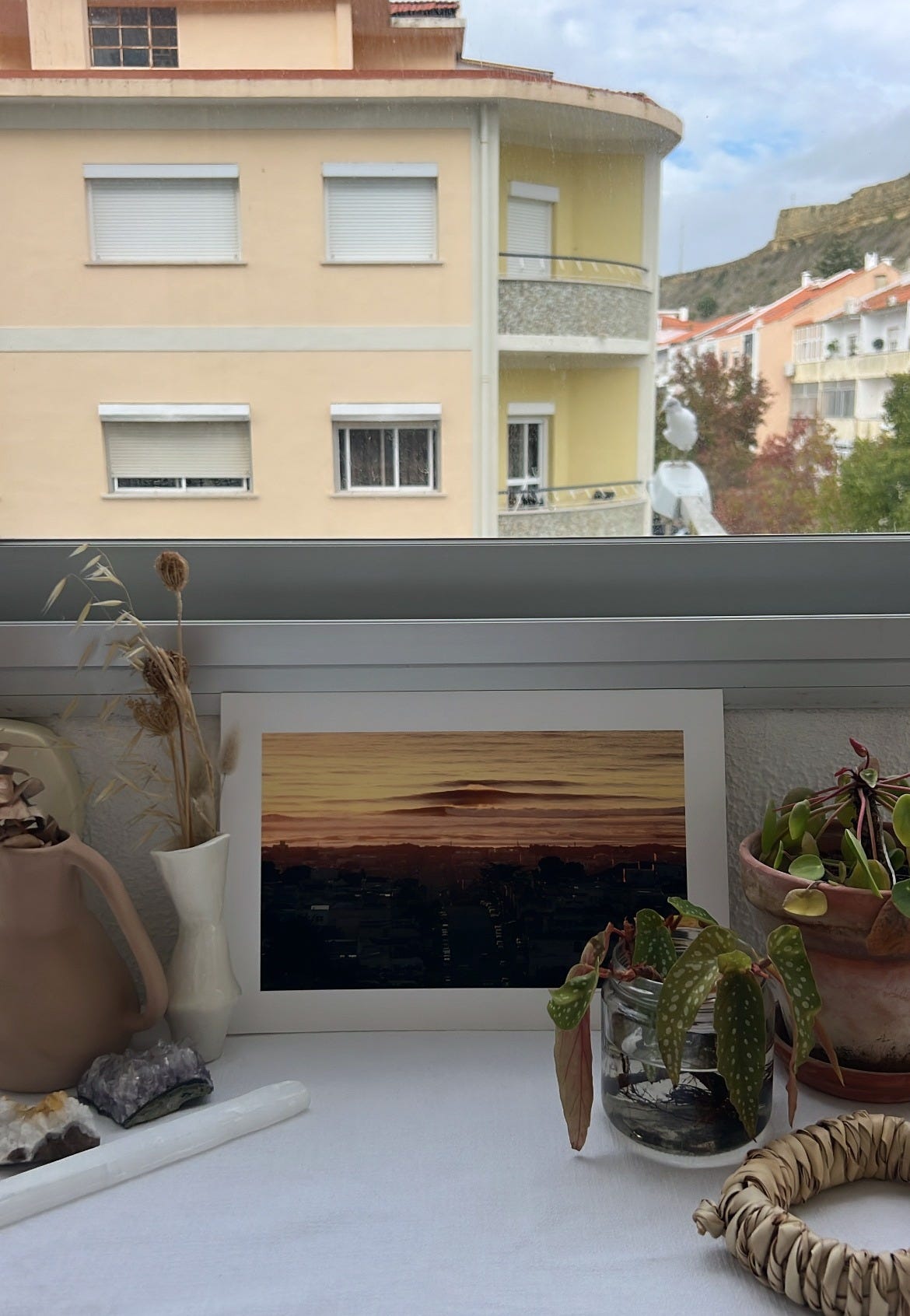
Give your loved ones something to hold onto. A note, a photo, or a small object. I left Shane a lava rock from Hawaii that he calls the “real ring of fire,” reminding him that I’ll always return. For me, Noelle’s art bookmark, a photo of Ocean Beach, and crystals my sister gave me years ago bring me such peace.Schedule your connection.
Plan a FaceTime soon after you arrive. It eases the unknown and gives everyone something to look forward to, turning absence into anticipation.Ground yourself in your “why”.
Doing the things that make you the best version of self is good for you and for your loved ones. Your journey isn’t a departure from them; it’s an extension of your lives together.Create your practice around change.
When I feel sad and miss them, I say to myself “this will also change”. I will be back with them. This time apart is temporary and it is also important for me. With every breath, every thought, every motion, everything is impermanent. That brings me comfort.
I’ll close with a thought from Joe Dispenza, “Be more excited for your future than your past.” The moment is full of change. How you meet that change (your mindset, your presence, your openness) shapes the person you’re becoming. Be excited for them and be part of that change.